Google Ads Ban vs Suspension: Can You Create a New Account?
People call it a ban; Google calls it a suspension. Either way, opening a new account is the wrong move. Here is the difference and what to do instead.
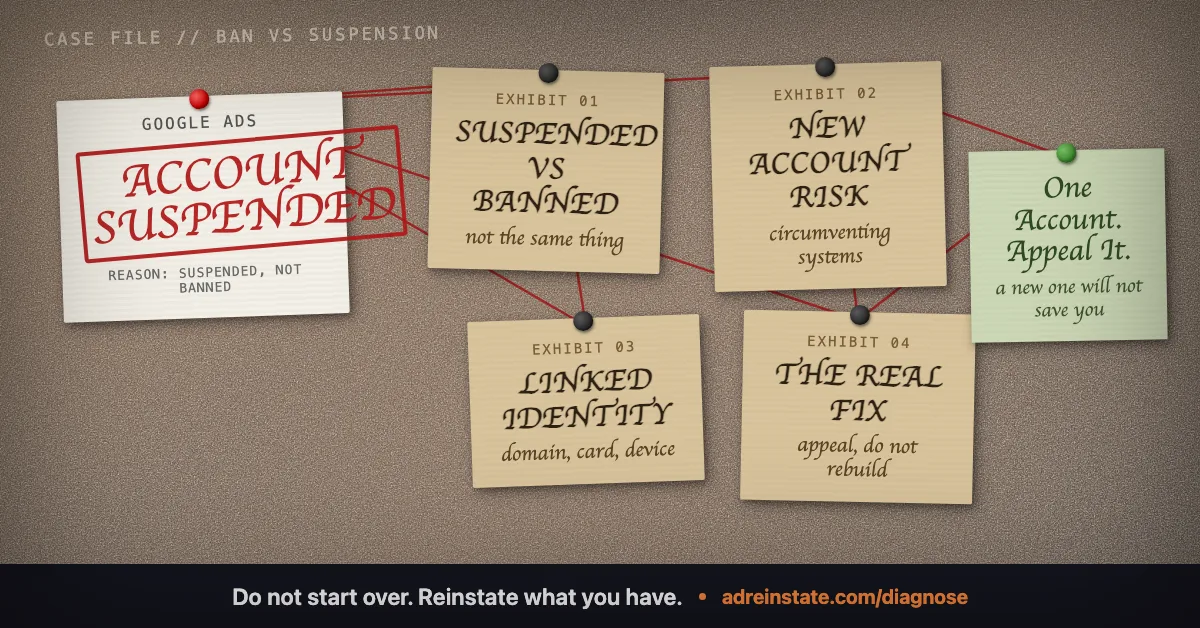
Direct answer: You should not create a new Google Ads account after a suspension. Google can connect accounts through domains, payment methods, users, devices, business details, and linked accounts, so a new account is usually detected, suspended too, and can make the original case worse. A suspension is effectively permanent until a successful appeal, so the right move is to fix and appeal the account you have.
'Ban' is the word people search; 'suspension' is the word Google uses. The distinction matters less than the instinct it triggers, which is to start over with a fresh account. That instinct is the single most damaging move you can make, and this guide explains why. For the full recovery workflow, see what to do when your Google Ads account is suspended.
Why people search for "ban"
A suspension feels like a ban because the account is offline with no obvious route back, and the notice does not promise reinstatement. But Google's account suspensions overview frames this as a suspension that can be appealed, not a permanent ban. The account is not erased; it is held pending a successful appeal.
Suspended, disabled, limited serving, and disapproval
- Suspended or disabled. The whole account is offline and needs an appeal after the root cause is fixed.
- Limited serving. An ad runs in a reduced way because of a restricted-content rule. The account is not suspended.
- Ad disapproval. A single ad is removed while the rest of the account keeps running. Fix or replace the ad.
Knowing which one you have prevents both panic and complacency. The full escalation ladder is in our guide to Google Ads policy violations.
The risk of a new account
Opening a new account after a suspension is not a clean slate, it is a new violation. Google detects re-entry through a web of signals:
| Signal | How it links you back |
|---|---|
| Domain | The same website or landing pages tie the new account to the old. |
| Payment method | A shared card or payments profile is a strong identity link. |
| Users and access | The same login, team members, or manager account connect the accounts. |
| Devices and network | Shared devices or IP ranges can associate the accounts. |
| Business details | The same business name, address, or phone number reappear. |
When Google connects the new account to a suspended one, it treats the attempt as Circumventing Systems, and the new account is usually suspended too. This is also a common cause of the 'no reason' instant suspensions covered in why false positives happen.
A new entity or domain is not a shortcut
Some advertisers try to sidestep the link by registering a new company or buying a new domain. It rarely works and often backfires. The shared payment methods, people, devices, and business signals usually remain, and deliberately structuring around a suspension is exactly the behaviour the policy is designed to catch.
What to do instead
Resolve the account you have. Diagnose the original suspension, fix the root cause, and appeal with evidence, following our forensic reinstatement process and the steps in how to appeal a Google Ads suspension. If you are unsure whether your case is viable, an AdReinstate Audit documents the likely trigger first. Eligible Google Ads policy, billing, and Merchant Center reinstatement services carry a 100% money-back guarantee if we do not reinstate the account within 60 days, subject to terms, and no one can guarantee Google's decision. Start with a free diagnosis before you do anything irreversible.
Frequently asked questions
Is a Google Ads ban the same as a suspension?
Effectively yes. Google does not use 'ban' as a formal status; it suspends accounts. People search 'ban' because a suspension feels permanent. A suspension stays in place until a successful appeal, so in practice it behaves like a ban until you resolve it.
Can I create a new Google Ads account after being banned or suspended?
No. Creating a new account after a suspension is itself a Circumventing Systems violation. Google links accounts through domains, payment methods, users, devices, business details, and linked accounts, so the new account is usually detected and suspended, and it can make the original case worse.
What is the difference between suspended, disabled, and limited serving?
A suspended or disabled account is offline and needs an appeal. Limited serving means an ad runs in a reduced way due to a restricted-content rule, without the account being suspended. An ad disapproval removes a single ad while the account keeps running.
Will a new domain or company let me start fresh?
Usually not. Google can connect a new entity or domain to the suspended account through shared payment methods, users, devices, business details, or website signals. A new legal entity or domain is not a reliable shortcut and can compound the problem.
What should I do instead of opening a new account?
Diagnose the original suspension, fix the root cause, and appeal the existing account with evidence. That is the only path that resolves the underlying record rather than adding a second violation to it.
Still narrowing down what triggered your suspension? Read the plain answers to common questions , or see how our reinstatement services map to each violation type.
Not sure which suspension you have?
Start with a free diagnosis. We identify the likely trigger and tell you honestly whether we can fix it, before you spend anything.